Let’s talk about how annoying subscription renewals can be. Imagine you’re going through your day, and then suddenly, out of nowhere, bam! A notification appears in your email to remind you “Your Amazon Prime annual subscription will renew in 3 days.” Maybe you’re at the checkout counter when the cashier informs you that it’s time to renew your Costco membership. And don’t get me started on car insurance, which is due every six months at the most inconvenient times. Before you know it, you’re calculating in your head, trying to figure out which checking account can cover the cost without disrupting your entire budget.

Whenever those charges popped up, I would transfer funds from my savings account. And yes, technically speaking, I had the money sitting there available. But every single transfer came with a heavy side of guilt that weighed on me. There was always this nagging voice saying, “I’m using my savings again… for something I knew was coming.” Sound familiar?
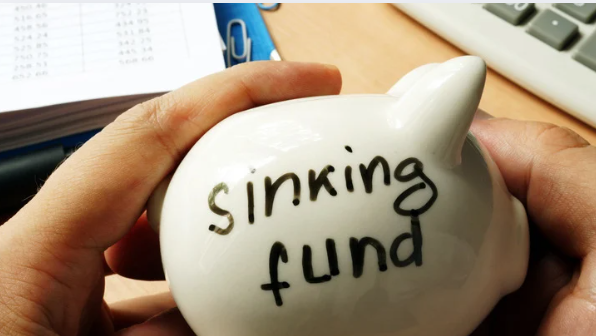
Then I discovered sinking funds, and honestly, it transformed my approach to managing these expected yet irregular costs, resulting in less anxiety about budgeting when renewal season arrives.
What’s a Sinking Fund?
A sinking fund is a simple system for saving for specific expenses you know will eventually come, even if you don’t think about them daily. It’s not your emergency fund, which is your safety net for genuine surprises like unexpected unemployment, urgent health issues, or your car breaking down. Sinking funds are for predictable expenses like yearly memberships, car insurance payments, or the annual veterinary check-up.

Take your car insurance, for example. It renews once or twice a year, without fail, just like clockwork. While it may seem like an unexpected financial hit when the invoice arrives demanding immediate payment, it’s entirely predictable. It’s the same with annual subscriptions, membership renewals, and other bills that come around on schedule.
My Setup
I established an “Annual Bills” sinking fund, and it has become one of the most useful financial strategies I’ve implemented. This single fund covers everything from Amazon Prime, Costco membership, car insurance, renter’s insurance, and any other subscription that renews yearly or semi-annually.
When I sat down and added it all up, I was shocked to see it totaled around $1,560 per year. That’s a significant chunk of money when you see it all together in one number. But here’s where the psychology comes in: instead of saving $130 monthly, which felt overwhelming, I broke it down into weekly automatic transfers of $30 when dividing . It’s the same amount, but it completely changes the feeling.

Now I don’t have to remind myself to move money around or worry about whether I’ve saved enough. When it’s time to renew a subscription or pay an insurance premium, I cover it directly from that dedicated account, and I’m done.
Sinking Funds Worth Setting Up
Consider setting up sinking funds for the following:
- Holiday spending: gifts, decorations, hosting
- Vacations and travel
- Car maintenance: oil changes, tires, repairs
- Medical and pet care: glasses, dental work, vet visits
- Housing repairs: appliances, roof work
- Professional development: courses, certifications
Start with one or two that matter most to you. The routine builds the habit, then you can add more over time.
How to Set Up Your Own
- Step 1: List Your Irregular Expenses
- Make a list of every irregular expense that sneaks up on you, from holiday spending to car repairs.

- Step 2: Calculate Your Weekly, Biweekly or Monthly Amount
- Do the math. Find the yearly total cost, then divide by 52 (weekly), 26 (biweekly) or 12 (monthly), whichever works for you.
- Step 3: Choose Your Account Type
- Choose where to put your sinking funds based on your habits. If you’re tempted to dip into savings for other things, consider opening a separate savings account at a different bank—the transfer delay makes it harder to use the amount at that moment. If you’re more disciplined, sub-accounts within your regular bank work fine and keep everything visible in one place. Possibly label it based on what you’re saving for, such as “Annual Bills,” “Car Fund,” or “Holiday,” to provide motivation.
- Step 4: Automate Your Transfers
- Set up automatic transfers to move money right after payday. The key here is that the money moves into savings before you see it in your checking account or think about spending it.

- Step 5: Pay Without Stress
- When the bill comes, pay it directly from your sinking fund with peace of mind.
“But I Can’t Afford to Save Extra Right Now”
I get it. If money’s tight, the idea of setting aside $30 a week can feel impossible. Here’s the truth: even $5 or $10 a week helps. Start with the expense that stresses you most, whether that’s your car insurance or holiday spending.
Yes, you might not save the full amount the first year, but keeping something means that $600 bill becomes a $400 bill. That’s still progress. And once you see that first sinking fund work, you’ll find ways to add to it. The momentum builds on itself.
Your Turn
Pick one expense that always catches you off guard. Do the math. Set up that transfer today—even if it’s small.
What’s the first sinking fund you’re going to create? Drop a comment below and let me know which expense stresses you out most. Let’s normalize planning together.
Subscribe to SIP & Reset to get weekly posts to your inbox, plus access to my Beginner’s Guide. It’s a quick 3-step reset that helps you see where you are and take your first confident step forward.

Disclaimer: This blog post is for informational purposes only and does not constitute financial advice. The content is based on my personal finance journey and individual experiences. Your financial situation may differ, so consider consulting with a financial advisor for personalized guidance.
Leave a Reply